What is it with zucchini? If you miss one day in the garden, those sweet little miniature zucchinis that are smaller than the blossom still hanging on to the end of them suddenly turn into monster-sized zucchini baseball bats.
I prefer the zucchini somewhere in between the two – a little bigger than just two bites, but not so big that they are six inches in diameter, full of seeds and the length of my arm. When they get that big, there is nothing else to do with them except…bake zucchini bread!
I love zucchini bread, but I’m not sure why it’s called bread because it probably has more sugar and fat than most cakes! It’s an unhealthy mess, with a scant two cups of grated zucchini to add beautiful flecks of green – just so I can pretend it is healthy. A bowl of mint chocolate chip ice cream is green too – and probably more healthy than zucchini bread.
But given the over abundance from the garden, what’s a person to do?
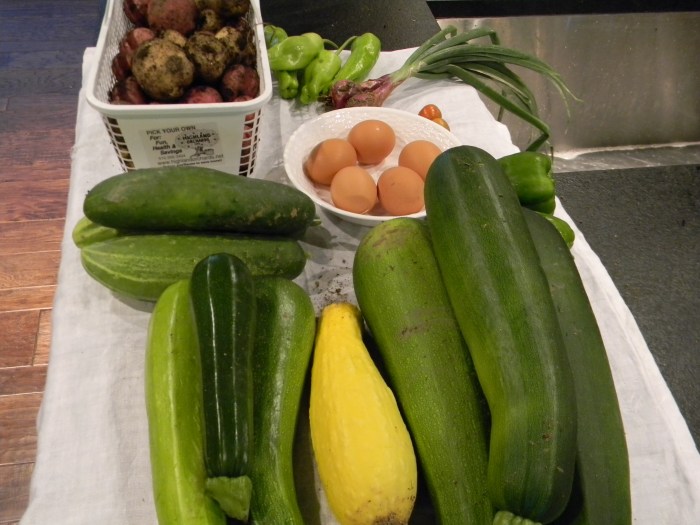
One day’s haul from the farm — 5 eggs, cucumbers, peppers, shallots, potatoes, yellow squash, a few small zucchini — and a couple of baseball bat-sized zucchini because I turned my back on them for ONE day.Yummy!
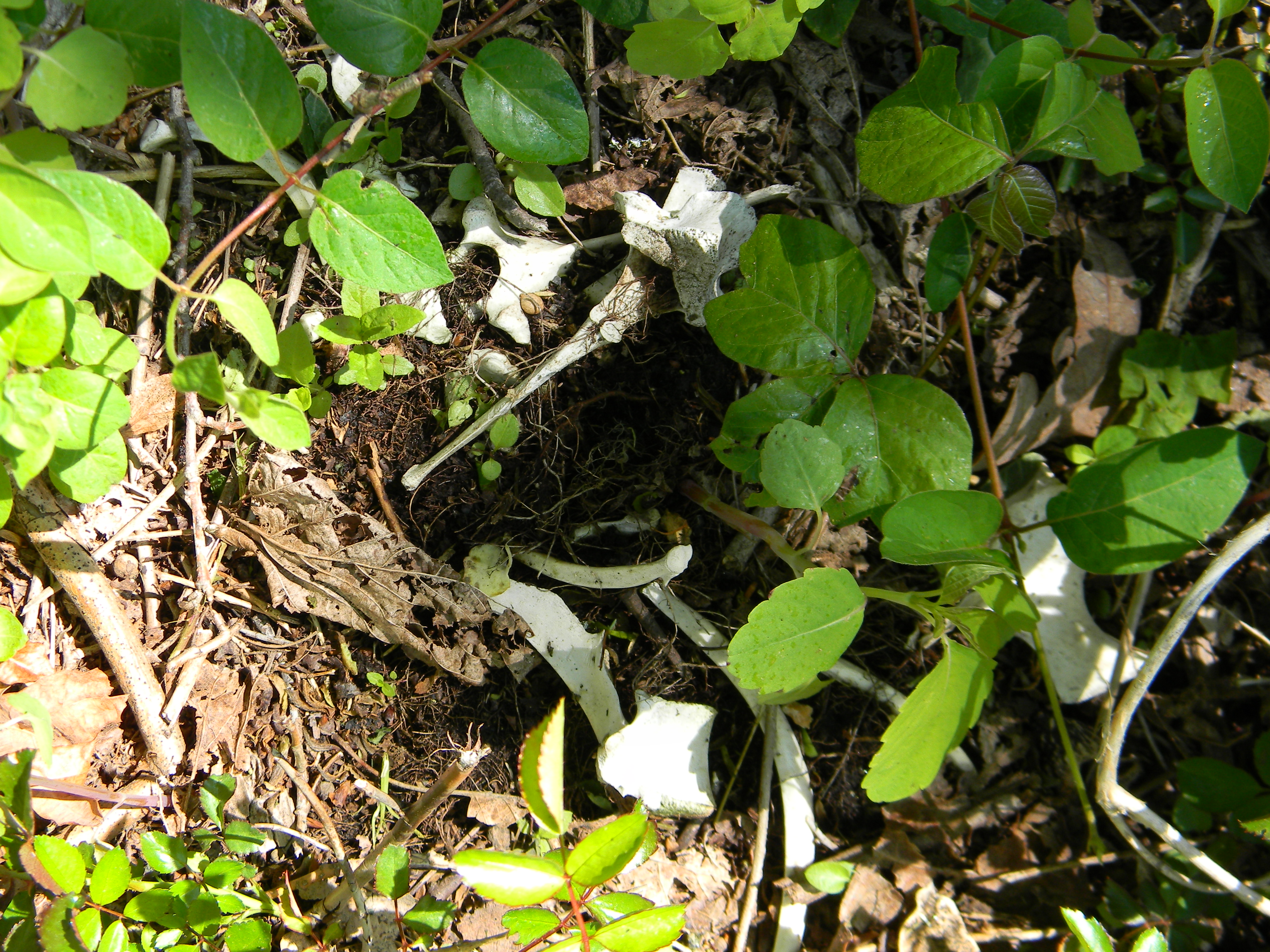
We found the skull of some sort of animal – probably a fox, a while ago. And we’ve dug up an assortment of soup bones, cow bones and “who knows what” bones as we’ve been clearing the property. I know there are bones around, yet it’s always a bit startling to be raking leaves and uncover bones. In the front meadow alone I’ve found two such “burial grounds” for whatever they may have been.
It has happened often enough that Chris’ friend Len provided the proper attire for clearing our property of bones — a “Bone Collector” shirt. Now I hand him his shirt and a shovel and tell him I’ve found more…
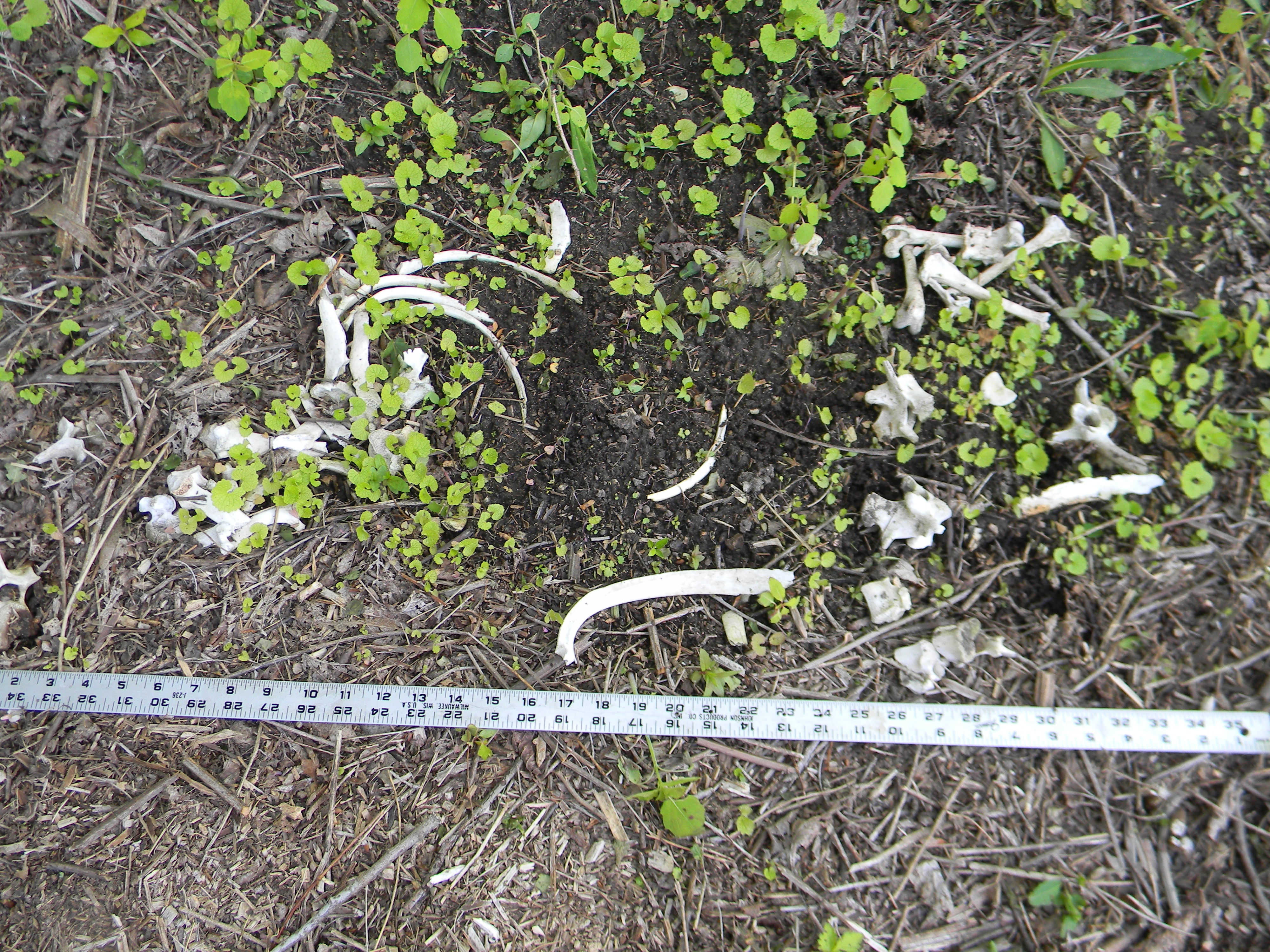
Here is the most recent find.
An Assortment of bonesCouldn’t have been that big of an animal, maybe 30 inches long — ribs, back bone, etc. — scattered across the ground. I guess finding the bones is better than finding a dead animal!A box of bones — what’s a bone collector to do with all these bones?
For all of you who have been holding your breath along with me, we can breathe a sigh of relief. Yes! The garden is actually producing food!
I know you were all waiting for that good news.
It got off to a rocky start – and I do mean rocky. We pulled everything from gravel to boulders out of that garden. Then, whole rows of plants went missing, thanks to a voracious baby bunny that squeezed between the wire squares of the fence. For as much as he/she ate – I’m surprised it could squeeze back out again.
Some stuff was slow to take off. A seed tape of lettuce must have sat beneath the surface of almost rock hard dirt for about a month before it started pushing through – now it’s producing more lettuce than we can eat (or want to eat).
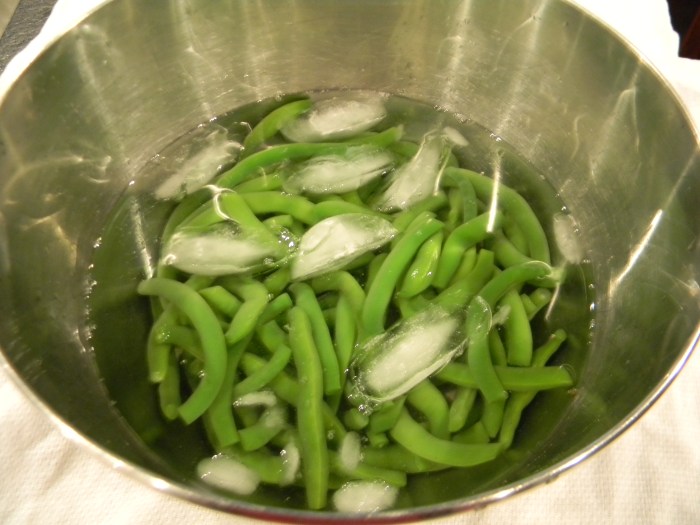
The peas have come and gone already – but I’m already planning a fall crop. The beans are throwing more beans at me than I can keep up with. I blanch and freeze a colander full almost every night.
The zucchini is starting, and you know if you turn your back on those things, they turn into the size of a baseball bat before you know it. I’ve been freezing those (and yellow squash), and grating some of the zucchini so that when the snow flies, I can make zucchini bread. I’m waiting for the acorn squash and patty-pan squash to take off, the tomatoes plants are loaded with green tomatoes, and we’ve picked our first two cucumbers.
While there have been some flops (like the garlic and Swiss Chard), the garden seems to be a success – even the sunflowers are blooming to give their approval.
Yes, we’ll be eating well – well into next year.
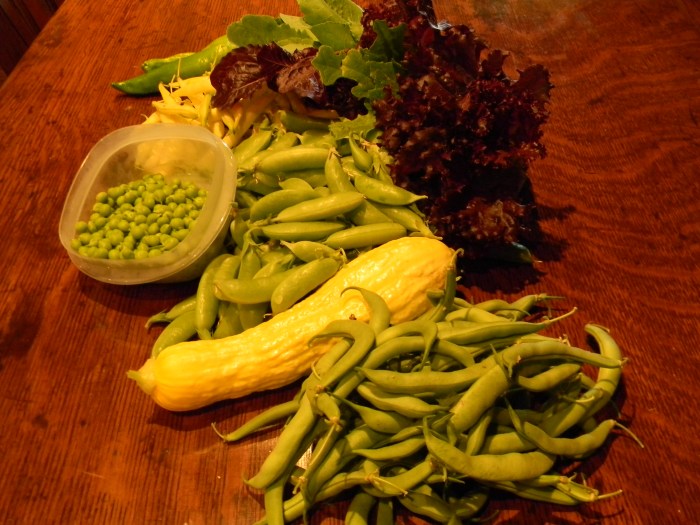
Lots of produce — lettuce, green beans, yellow beans, yellow squash and peas.The bean brigade — getting ready to freeze.The “scraps for the girls”A quick blanch in boiling waterAnd a dunk in ice water.Then freeze on a cookie sheet, pack in a bag and I’m ready for winter!
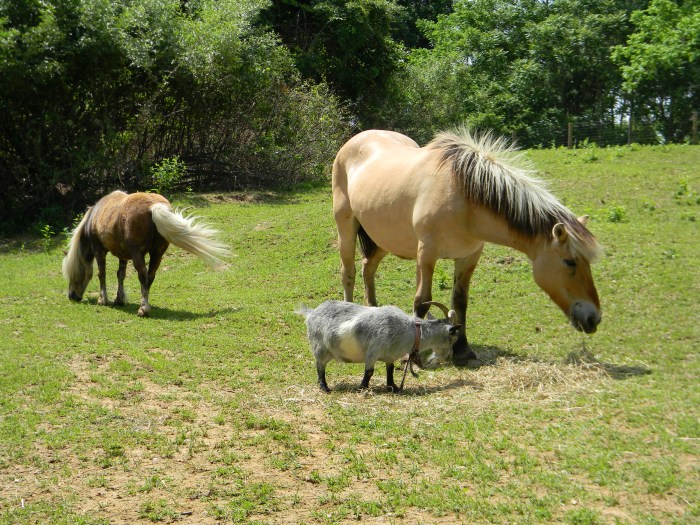
It would be an understatement to say that the “Three Musketeers” – Disa (the Norwegian Fjord Horse), Pono (a miniature horse) and Fiona (our goat) – REALLY enjoy their pasture. In fact, they’ve chomped it down to the roots.
We realized that we probably needed to divide the pasture in half, so they can graze on one side, and let the other side recuperate!
Being novices at all of this, we made a trip to Tractor Supply to look into electric fence tape. In this modern digital age, the aisle of electric fence supplies also offered a free “Instructional DVD” on installing electric fences. We figured it would be really complicated if you had to take home a DVD to figure out how to do this.
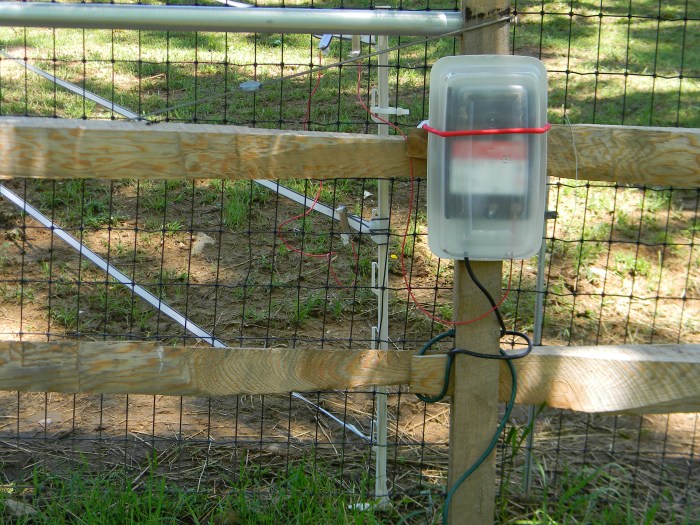
As it turns out, it wasn’t that hard (well, it wasn’t hard for me, because Chris did the work). He put in the plastic fence posts, a couple of ground posts, strung the electrified tape, flipped on the power – and voila – we had a divided pasture.
That was the easy part.
The hard part has been keeping (mis)chievious – “Miss” Fiona (the “Miss” is for Mischievous) from jumping through the fence. I guess the grass is always greener on the other side. At first Chris would corral her back to the permitted side of the pasture. Eventually we gave up. After all, one little goat can’t eat all that much newly growing grass – can she?
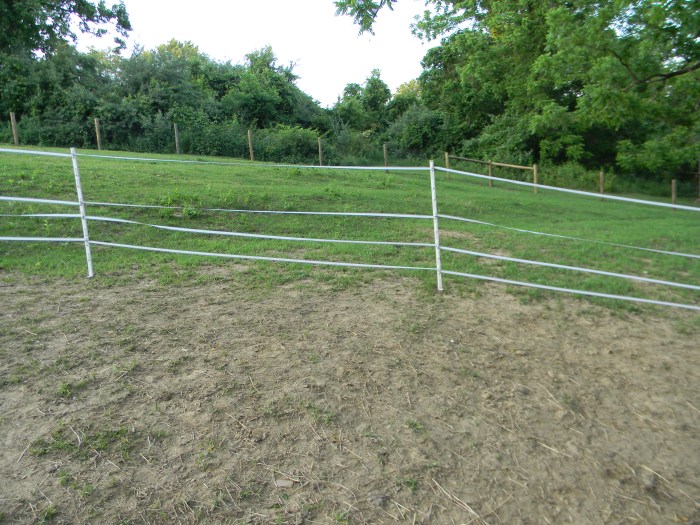
The Three Musketeers — Disa, Pono and “Miss” FionaA nice run of an electric fence — they’ll never cross that!Chris’ ingenious “MacGyver” invention to keep the electric charger from getting wet — it’s inside a plastic shoe box.The grass really is greener on the other side — as it recuperates and has a chance to re-grow.Disa better watch her tail, it’s getting a little close to the fence.
If you’ve been following the blog, you know we have five girls – hens, that is. They are coddled and taken care of like they are part of the family. In return, they give us five eggs a day.
They have a beautiful coop, fresh water and plenty of chicken food. We visit them at least twice a day and give them a BOUNTY of chicken scratch and kitchen scraps (like strawberry tops, lettuce leaves, asparagus stalks, etc.). In the winter they get a night light and a heat lamp when it’s cold.
It was with a lot of anxiety the first time we let them out of the coop to “free range” for an hour or so. They strut and scratch at the dirt, gobble up bugs and peck at the leaves. They enjoy their time out of the coop, and Chris had pretty much trained them to a yellow, children’s size hoe. I read that in a blog somewhere. They used a yellow child’s hoe to gently corral the hens back into their coop, and over time, all they had to do was lift the yellow hoe and the hens would run back to the coop.
Our hens aren’t quite that cooperative. One scout hen usually returns to the coop, checks to see if their “treat” is there yet (a can of cracked corn), and then alerts the rest of the girls that it is time to come back in. Those other hens usually needed a little nudging with the yellow hoe to get them back in the coop, but we had a good routine going.
Until last Sunday.
We worked hard all day clearing brush on the hillside, took a shower and decided to settle in with a cold drink down by the chicken coop and let the girls have a run. And run they did. For the first time ever they headed for the hills into the thick, impenetrable (for humans) brush — overgrown bushes full of thorns, poison ivy and ticks. Off they went for an adventure.
No amount of calling, shaking the can of corn, begging or pleading would bring them back. Chris and I both made attempts to climb through the brush, got cut by thorns, whacked in the face with branches, and probably brushed up against poison ivy. Finally we called the search and rescue off and decided they would either come home, or they wouldn’t.
It was a quiet dinner that night while we mourned the loss of our chickens. Chris felt guilty for turning his back on them for a few seconds. I was busy trying to rethink what’s for dinner this week since we probably wouldn’t be having quiche on Tuesday night. And we kept taking turns getting up to check and see if they were back in the coop yet.
Finally, about 7:30, they came marching back, on their own, and went right into the coop. I figured they would, even though I worried that they wouldn’t. I mean where else would they get such tender loving care. There’s no place like home.
We’ve grounded them, at least for a while, or until Chris recovers from almost losing his girls.
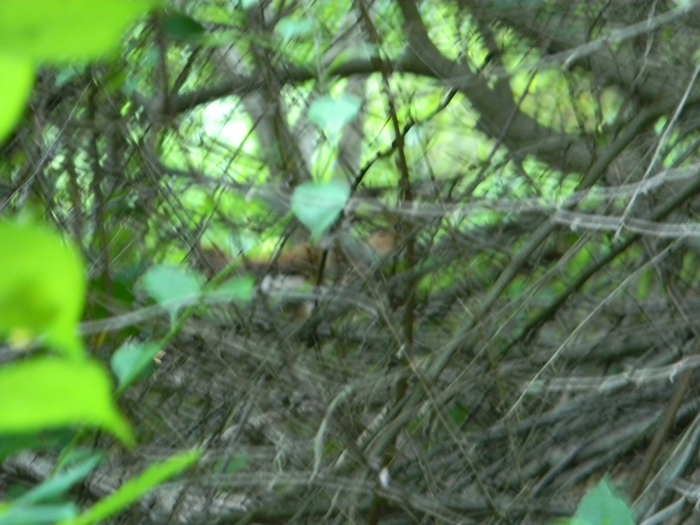
The thicket into which our girls disappeared.You can just catch sight of a brown hen, but she wasn’t coming out.Chris with his yellow hoe, trying to talk chicken & convince the girls to come back to the coop.
The Sunday Real Estate section of The Philadelphia Inquirer runs a column called “Haven.” Every week they feature a story about a house, its inhabitants and why it’s special.
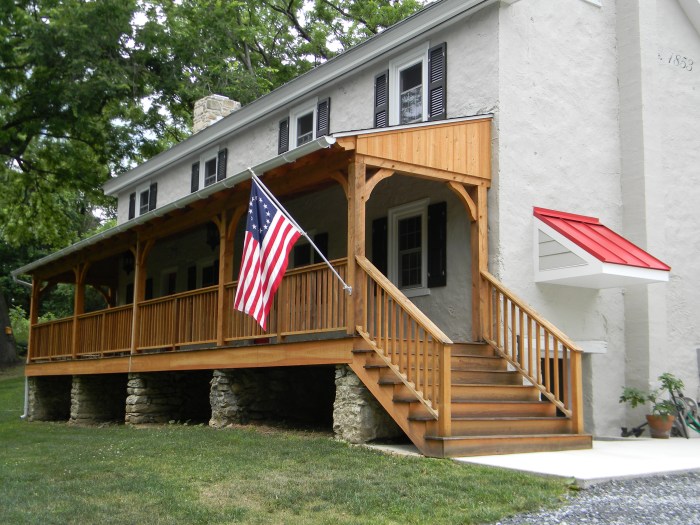
Well, no house could be more special than OUR house, because, of course, it’s OUR house. So I sent an e-mail and told them just how special No Rhyme or Reason Farm is. They must have agreed, because they sent out a reporter to interview us and our builder, John Smucker from Forest Ridge Builders. And they sent out a photographer (unfortunately on a rainy day) to capture the story. The article is scheduled to run next Sunday on June 12.
I love the way our house turned out, but I also loved the process. It was an amazing year to watch the transformation from dilapidated, vandalized and overgrown to this well-built, functional and beautiful home. Every week brought challenges. Some weeks the house changed dramatically – like when the fireplace was uncovered. Other weeks seemed to drag while the electrical and plumbing were being run before the walls could go up. But every step of the way was bringing this house back to life.
The problem is, I liked the process so much, I want to rescue more old dilapidated houses – just to see how they turn out. Every time I see a “fixer-upper,” I want to fix it. Of course, we won’t! We have our home – and it’s perfect!
But, for anyone who looks at those old houses the way I do – go for it!
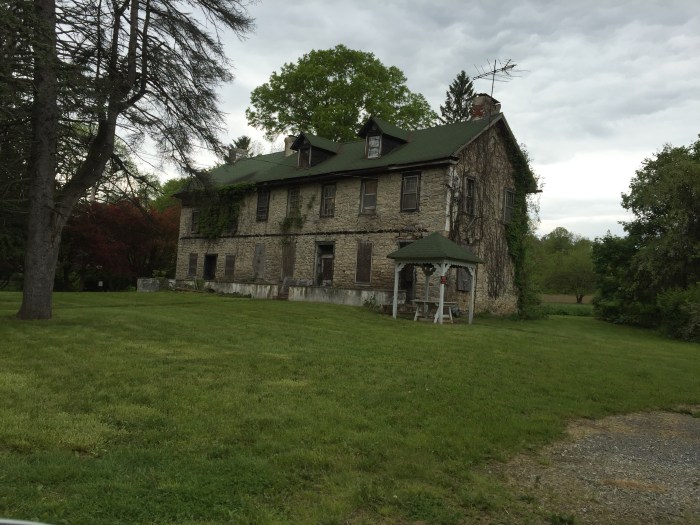
Potential? Chris says no.This one is nice — has a gazebo in the front yard. Just imagine what it could look like!
We came up with the name of the “No Rhyme or Reason Farm” because it was known as the Reason Farm (the last name of the people who owned the farm for many years), and…because there was no rhyme or reason why we would decide to buy and renovate a farm. The name seemed to fit.
Until now.
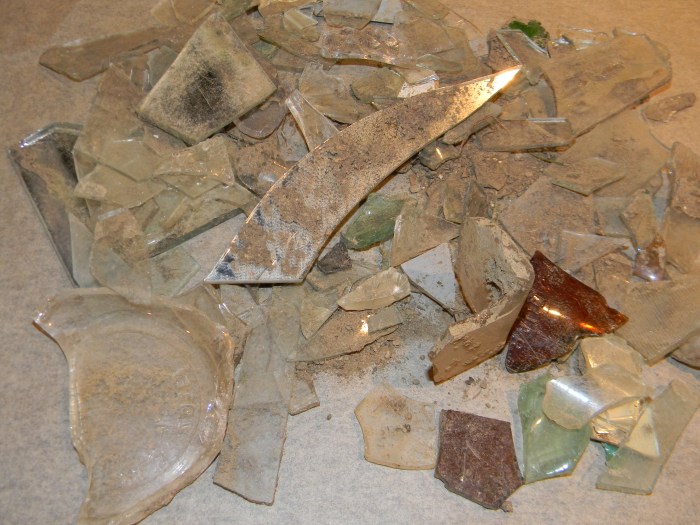
I think we should rename it the “Broken Glass Farm.” Either someone used the farm for target practice, or the glass fairies fly through at night and sprinkle broken glass around – just for sport. At first I was always hopeful that the glint of glass meant that I could dig up a whole glass bottle (and I have dug up a few). More often than not, that glint of glass is just a chip or a shard or a piece – not connected to anything else. It could be the neck of a bottle, but no matter how deep you dig, you won’t find the rest of the bottle. It could be a piece of green glass, and if you dig deeper, all you find is clear glass.
There is a lot of it. I pick it up; it reappears overnight, especially if it has rained during the night. It just works its way to the surface and sits there waiting for me to find it. So I decided to collect every piece of glass I found for one week and save it. I now have one pound, six ounces of glass chips, shards and pieces.
All this broken glass scattered around, for no rhyme or reason. I guess the name still fits after all.
Big pieces, little pieces, clear, brown, green, mirrors…. no rhyme or reason.
The horses have been here for more than a month now. It’s become part of our daily routine to trudge up the hill in the evening, pat Disa and Pono on the head and give them a carrot or a treat. Fiona won’t come close enough for us to even touch her, but she will eat a bit of grain from a scoop if we hold it over the fence. She is just starting to eat out of Chris’ hand now. If there’s a fence between us and her – she’s okay with us. Disa and Pono have no such issues.
But eating – whether its carrots, a treat or a pasture full of grass – has other consequences. Lots of consequences.
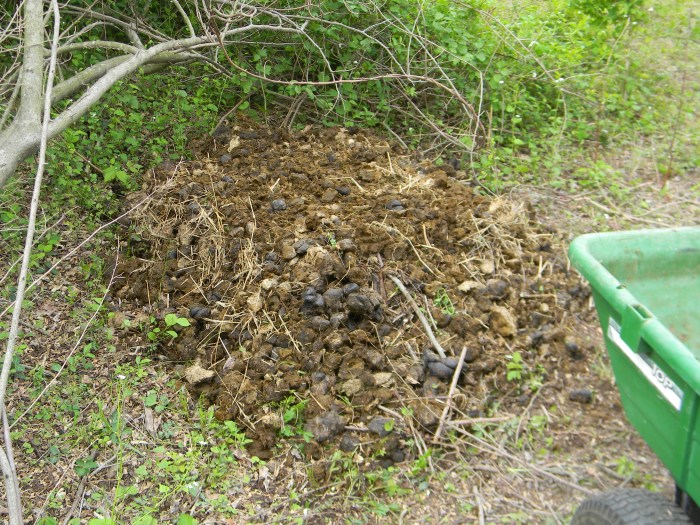
Chris spent a recent afternoon loading up the cart on the back of his John Deere with those consequences – twice. Two carts full! And dumping it all into a manure pile where it can rot and compost and eventually get re-loaded into the cart in a couple of years to till into my garden. And grow carrots — that I can feed to the horses… And so it goes.
Seriously? I don’t suppose we could train them to use a designated spot, instead of piles of this all over the pasture.Cart #1 — of two full carts.Our new manure/compost pile.
I’d like to tell you that our rhubarb plants are producing enough for our needs – not that anyone “needs” rhubarb – but I wanted to make rhubarb jam and rhubarb pie and put some in the freezer for making rhubarb pies in the middle of winter. Who doesn’t “need” a taste of spring in the middle of a blizzard?
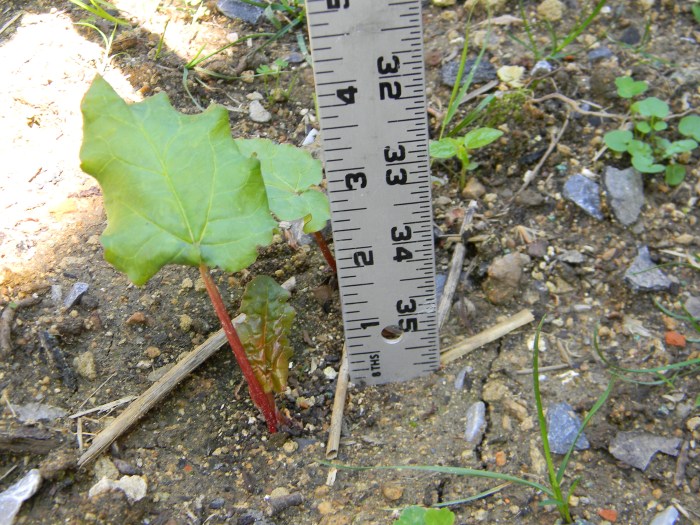
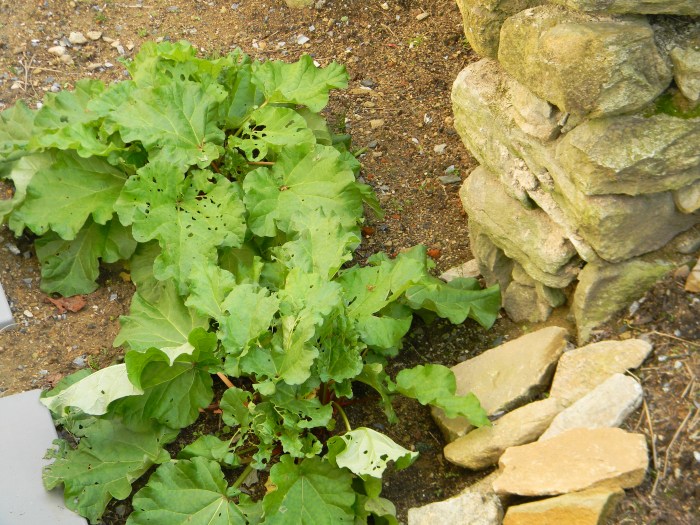
We brought two rhubarb plants with us when we moved from New Jersey. Yep…dug them up from our garden, put them in a big bucket of dirt and loaded them into the back of the moving truck. They survived the move, but the stalks they produce are skinny. I don’t know if it’s the variety, or maybe they need a hefty dose of fertilizer – but the harvest has been downright puny. We bought a few more rhubarb crowns at the garden supply store and planted them next to theses expat plants. They are beginning to come up, but they have a ways to go before I can harvest those stalks – in fact, it will probably be next year, or the year after. What’s a girl to do?
I went back to Highland Orchards. I had taken my kids there more than 30 years ago for picking things like blueberries and cherries (did you know that picking cherries requires climbing trees – and throwing out the cherry-stained clothes, but the kids had a great time). They also have rhubarb for the picking. It’s only a small patch – I guess rhubarb is not a big “pick-your-own” fruit (actually, it’s a vegetable – which may explain why people are confused about whether to pick it or not). We were the only ones in the rhubarb patch – pulling stalks to our hearts content. I pulled the stalks; Chris lopped off the leaves (which are poisonous – and may be another reason why no one else was in a hurry to pick rhubarb).
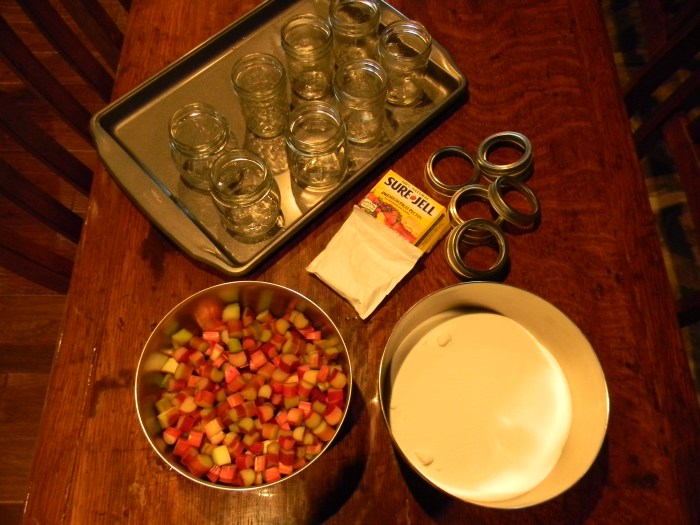
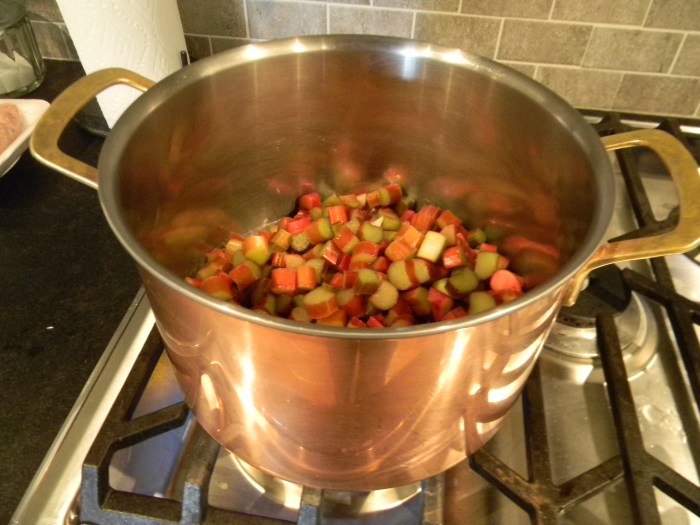
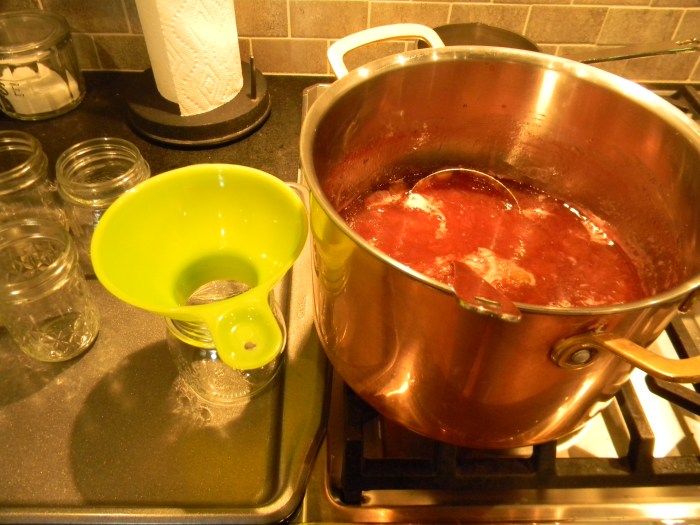
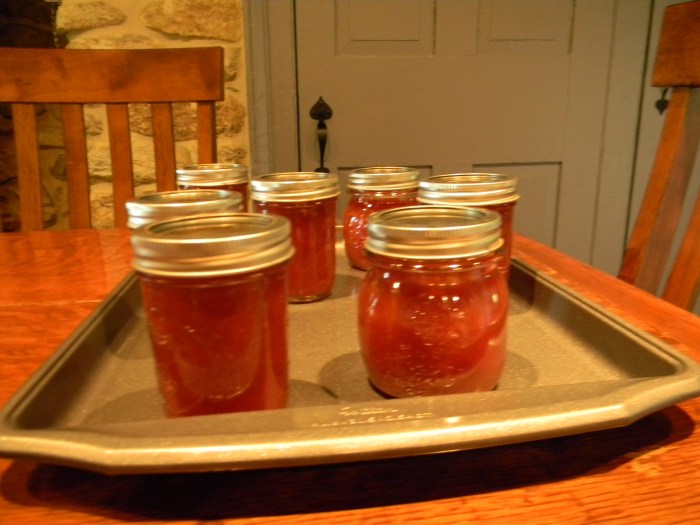
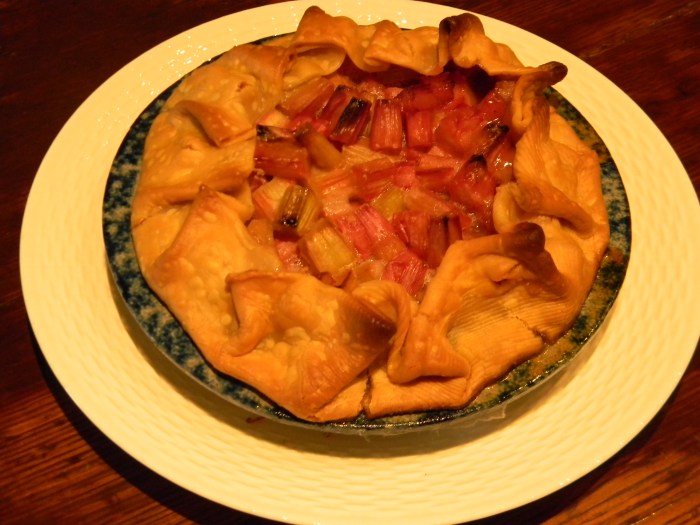
We came home with about six pounds of beautiful, plump, red rhubarb stalks. Chris chopped them up – I made the jam, and the pie – and packed enough bags of rhubarb in the freezer to quench that craving in January or February when I need a taste of spring.
At only an inch tall, it will be awhile.And this new rhubarb plant isn’t much better — 3 inches doesn’t make much jamBut these transplants from our New Jersey garden area healthy and growing.Ready to make the jam.It looks like a lot until you cook it down in the pan.And add a ridiculous amount of sugar.Nothing like hearing the jars “ping” when they seal. It always brings a smile.And an “open-faced” rhubarb tart — a nice treat for dinner.













 No Rhyme or Reason Farm